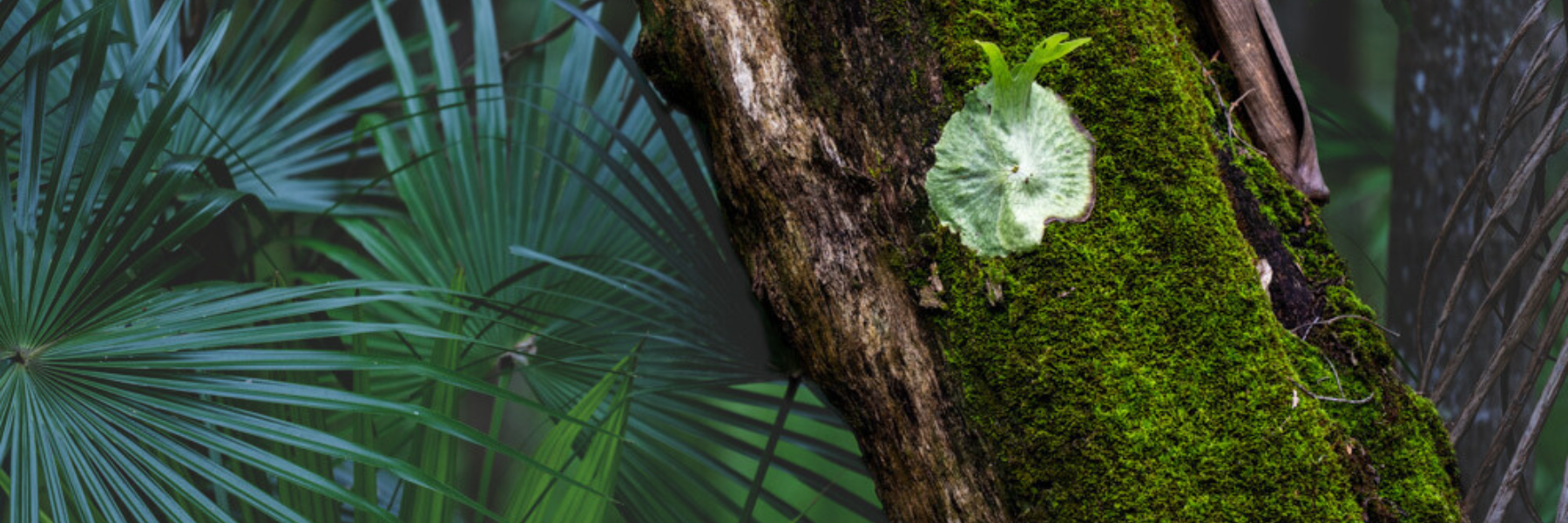
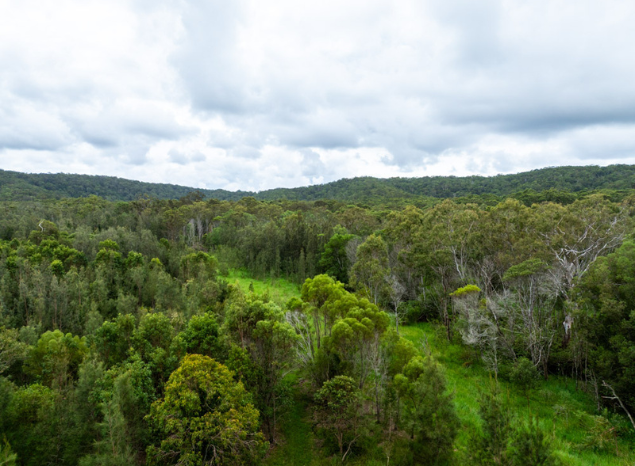
Sitting at the heart of a crucial wildlife corridor in northern NSW is the Minyumai Indigenous Protected Area (IPA), a 2,163ha wonderland of native rainforest, paperbark groves and floodplain wetlands which from time immemorial has been a crucial meeting place and thoroughfare for the Bandjalang clan of the Bundjalung Nation.
Bandjalang Country
Since its dedication in 2011 the IPA has provided a vital link between the Tabbimoble Nature Reserve to the west and the Bundjalung National Park to the east, which combined provide an uninterrupted 20,000ha expanse for native fauna roaming between the inland escarpment and the coast.
Within the IPA itself there are more than 447 native plant species and 5 endangered ecological communities, providing refuge habitat for 28 threatened species including the nationally listed grey-headed flying fox, long-nosed potoroo, koala and greater glider.
“Way back in the day my people would use this place as a campground, and that’s what the word Minyumai means – main camp, the camping ground,” according to Senior Women’s Ranger Maitland Wilson, who has been working on the IPA for eight and a half years. “My favourite place on all our Country would be Minyumai".
“Knowledge of this area was carried down the generations, even through the time when it was used as farmland. All our pops and nanas had strong memories… since 1999 all my generation has been coming down here all the time.”
The year 1999 was when the former pastoral property was handed back as freehold to the Bandjalang community following a concerted campaign led by revered leader Ngujung Lawrence Wilson. Maitland and her siblings are his grandchildren, and most of the Bandjalang people live on their traditional lands in the nearby towns of Coraki and Evans Head.
Indigenous Ranger Program
Maitland’s younger brother Harry Wilson is the Minyumai Ranger Supervisor, a role he has filled for the past 18 months.
“I’ve been working here since 2020 when I left school but I’ve been camping here with family since I was a little kid,” Harry said. “I manage a team of 12 Rangers and we follow the priorities set by the IPA Board".
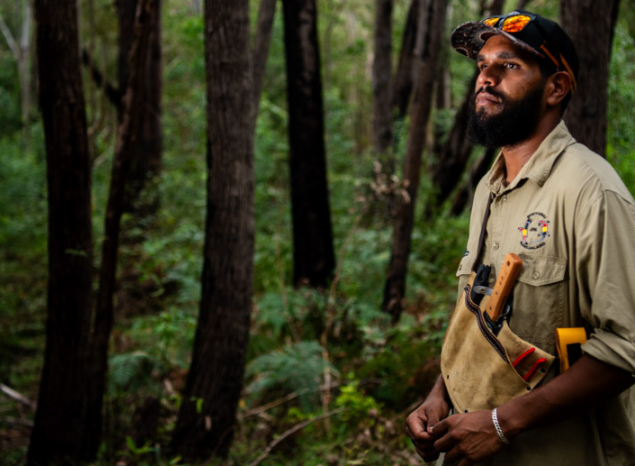
“Everything we do depends on the time of year. Right now it’s pretty boggy because we’ve had four wet years up here which makes things a bit hard. We do our native plantings and generally we do spraying when weeds are growing, then controlled burns in the cooler months to clean it all up.
“All year round we do wildlife monitoring and we’re also working to restore the wetlands that were drained and seeded with introduced setaria pasture grass from when they used to run cattle here.”
Restoring the land
While the IPA is slowly but surely being restored to its original state, the longest-serving Ranger and Assistant Supervisor, Justin Gomes, remembers how it was when he started work shortly after the IPA was dedicated.
“I seen this area change a lot,” he said. “There was a lot of weeds here, everywhere. One of the first things we did in 2012-13 was re-establish the Minjehla Track [which leads up to a waterfall flowing off the escarpment], it used to only go to the creek but we created the loop and put in the boardwalk. It’s a beautiful walk.”
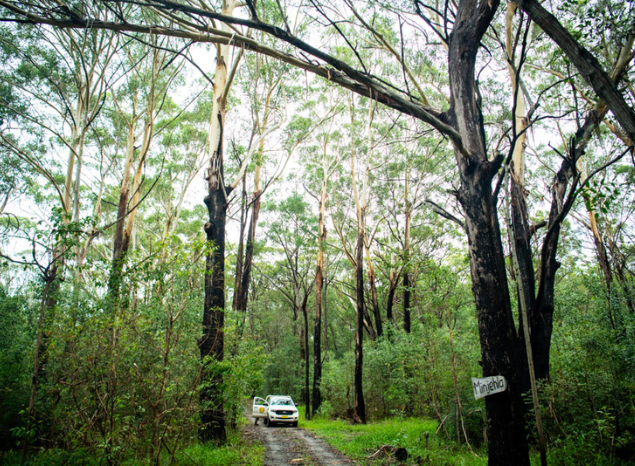
Then in 2019 bushfires ravaged the IPA and destroyed the boardwalk, almost taking out the Ranger headquarters along with it as the fires burnt through more than 90 per cent of the IPA.
“We had to repair the boardwalk, rehabilitate the whole thing,” Justin said. “This is my grandma’s Country on my father’s side… that’s the reason why it feels like I’m out here, to maintain and protect them as well on Country.”
Key projects
One of the main concerns from the 2019-20 bushfires was the potential impact on the many significant trees located on the IPA. Minyumai Rangers have mapped over 180 mature hollow bearing trees to date including scar trees and key hollow tree habitats for Gehrr (glossy black cockatoos), Wijoon (gliders) and owl species such as powerful owls. Since then more than 120 nest boxes have been installed to bolster existing natural nesting sites.
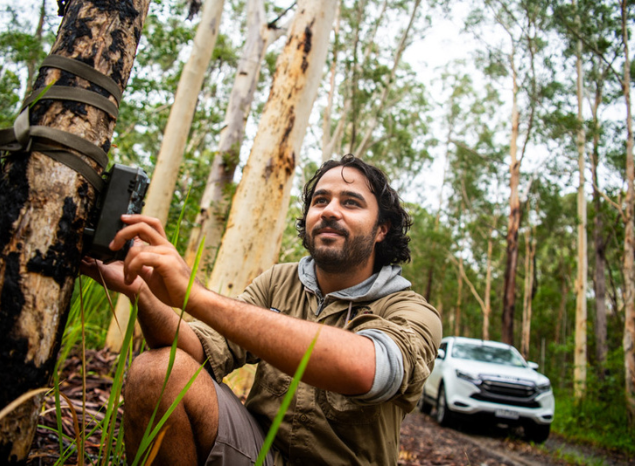
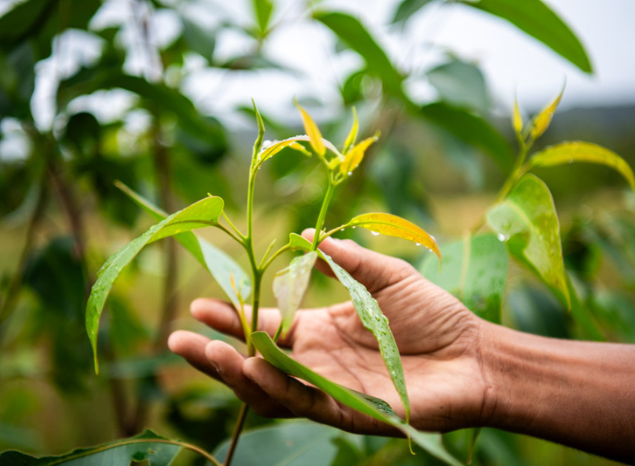
“We’ve got sugar gliders on the IPA and there’s two greater gliders that have been spotted on this property with the night vision,” Harry said. “They munch on the same feed trees as koalas (Boorubee), so if we can plant more habitat and feed trees for koalas that would bring the greater gliders back too.”
This tree planting is the focus of the Boorubee Conservation Project which is well under way.
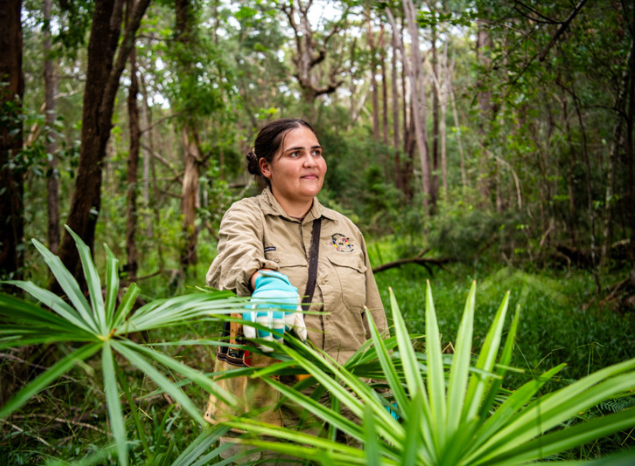
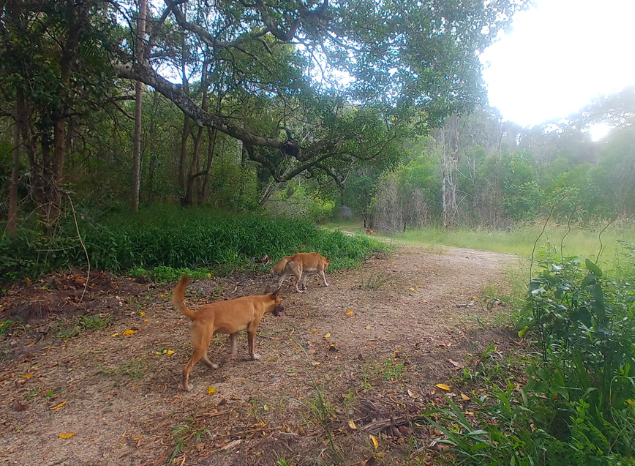
Another major focus is the Dingo (Ngugum) Management Project which aims to document, encourage and protect the dingo population which ranges across the IPA.
Using a combination of dingo scat analysis and camera traps installed throughout the IPA the Rangers are confident they have a well-established population of at least 15 dingoes.
“We need these apex predators on Country and they will help us eradicate introduced predators like foxes,” Maitland said.
Brother Harry said several Rangers have completed firearms training and obtained gun licences to help eradicate pests, including feral remnants of the original cattle herd that still wander the bush.
“We had this one big bull and he was making a mess of our property, so we teamed up with Local Land Services and trapped and shot him,” he said. “We’ve also got heaps of wild pigs to manage, but our dingoes are helping keep those numbers down.”
Healthy land, healthy culture
Harry said the Minyumai IPA has become a crucial part of rediscovering and safeguarding Bandjalang cultural traditions.
“There’s heaps of interest from our young people in coming out here… even my other mates from out of town, I bring them out here camping and they just love it,” says Harry, "I reckon the ancestors would be happy seeing what we’re doing, getting this Country back and managing it, bringing our native animals back.”
Our deep thanks to the Bandjalang Traditional Owners, the Minyumai Rangers and staff for welcoming us onto their traditional lands and sharing their knowledge with us.