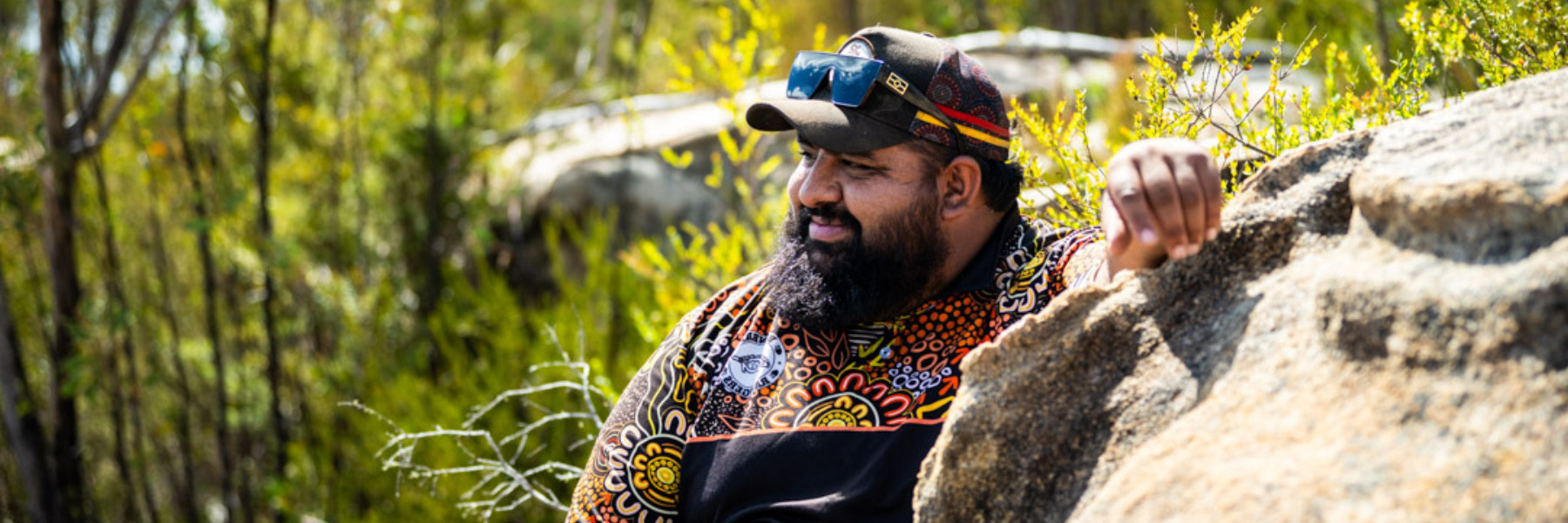
Sit down with Kane Patterson on Banbai Country in the New England region of northern NSW. Once upon a time Kane used to wag school to come out to their Indigenous Protected Area, but now he's the Head Ranger and inspiring the next generation.
My name’s Kane Patterson. I’m a Banbai Ranger from a small community called Guyra. This is my 15th year of being a Ranger.
When I was a young fella, I didn't really get into school, I'd actually wag school to come out here and work with all my older cousins. Now I'm the head ranger of our small ranger group.

I didn’t know much about Country as a kid. First coming in as a ranger, I didn't even know what my role was, I didn't know what it meant. I thought it was just all about fencing and track clearing.
When I look at the young fellas I think about how I was at that age, just finding my place. I’ve seen the boys’ confidence grow. I’m really proud of that as well.
Connection and mental health
I've learned a lot. When I first started, I was a young fella and it was just a job. But now, it's much more than that. It's being connected to your Country, being a part of it.

As you get older, you really immerse yourself into the Country. It’s a healing thing as well, just spending a little bit of time out here when you're stressing out. It's good to be able to get out on Country.
It’s very good for your mental health. I’ve seen a few of the boys in the community, not really doing much, not really living much. Having the boys come out here, and just be on Country, and interacting with different people I've seen their confidence really build. They have built themselves up in the last two years - the confidence that they can gain from stepping out and working with different landholders and different organizations. You’ve got to build that confidence. People can really find who they are through this type of work.

Looking after Country
Looking after Country means everything. Preserving Country for the future generations, being a part of Country, being a part of the bush. Younger fellas come out here and be a part of that, they’ve got something to look after as well.
It's really important being a part of Wattleridge, the first IPA in NSW. Wattleridge mainly consists of mountain, granite Country. It’s got a lot of boggy areas, wet sclerophyll forest and dense bushland. On our Tarriwa Kurrukun IPA it’s more of a drier forestry, stringybark Country with a few upland wetlands that we manage, and our main two river systems as well.

We’re still doing the same work that my uncles and older cousins would have been doing, but in a different aspect. They’ve been inspirational to me. The favourite thing for me is seeing good outcomes of our work reflected back.
The main thing I’ve learnt personally is about being resilient. I think the main challenge is just changing with the seasons. You’ve got dry times … that's one of the hardest things to see when you got big, devastating wildfires coming through Country and burning hot. That’s why it's important for us to be on ground implementing these cool burns around our cultural sites.

Hopes for the future
When our Elders first come out here, I don't think they would have ever pictured us to be successful with our work. We’re a household name in the area now, and leaders in a lot of areas. We’re very, very proud we’ve been able to help different communities with cultural burning, and take on that lead role.
My hopes are just always to have the kids out, the next generation. Those young fellas coming in now to carry that same legacy that we have carried on here for generations.

It’s crazy we don’t have more support in NSW. Being one of the main states that a lot of mobs were disconnected to, it’s sort of unreal that we haven't got that support from our government to get mob back on Country, connected to Country.
If I had a message to the government it would be: Come out here, come out on Country with us. See how we live, and who we are, and how connected we are to our Country. How much we love our country. That'd be my message.
-Kane Patterson
Learn more about the Banbai Rangers and their Indigenous Protected Areas in our article IPA in Focus: Banbai Country.