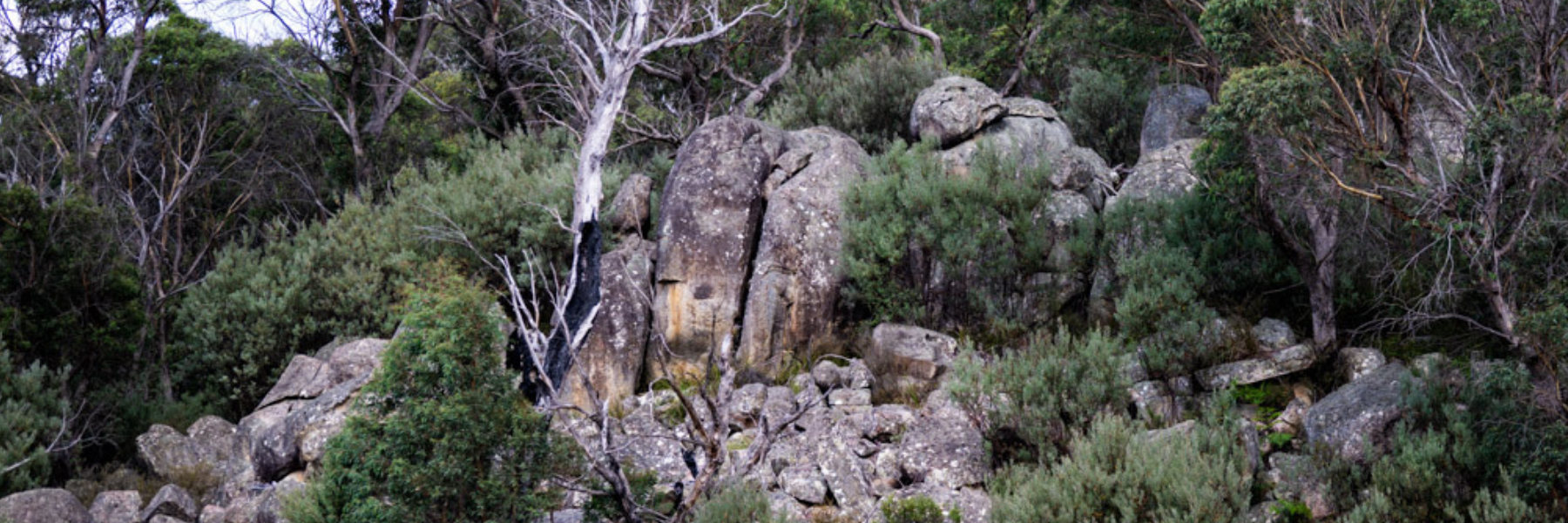
Discover the striking mountainous Country of Banbai's Indigenous Protected Areas (IPAs) in northern NSW, including Tarriwa Kurrukun and Wattleridge - the first IPA to be declared in NSW back in 2001.
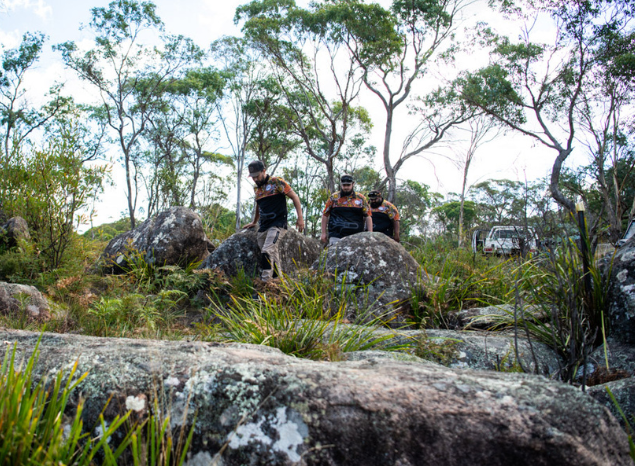
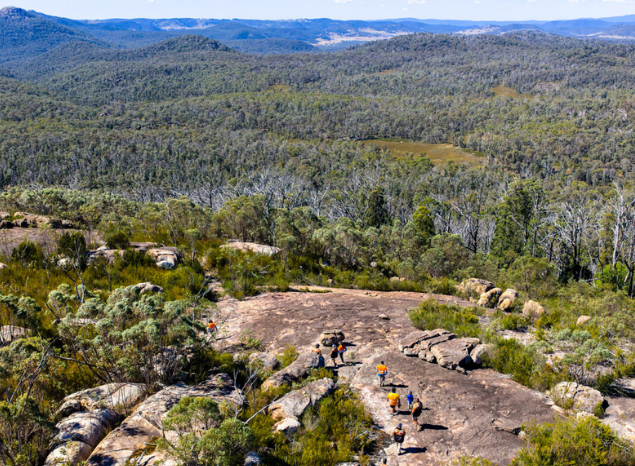
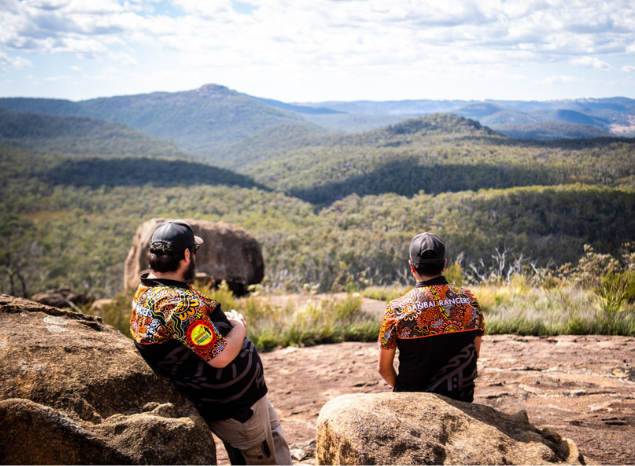
Standing among enormous grey granite slabs and boulders at Knucklebone, an ancient lookout high above the New England Plateau in northern New South Wales, Banbai Senior Ranger Kane Patterson tells the Creation story of Birribirigibba.
“This was his place where he kept watch over our Country, until one day a neighbouring tribe sent a woman to distract him so that they could take over our land,” Kane said. “When our people found out what had happened they froze Birribirigibba and set him atop that rock over there so that he would never leave his post again until we regained control of our Country.”
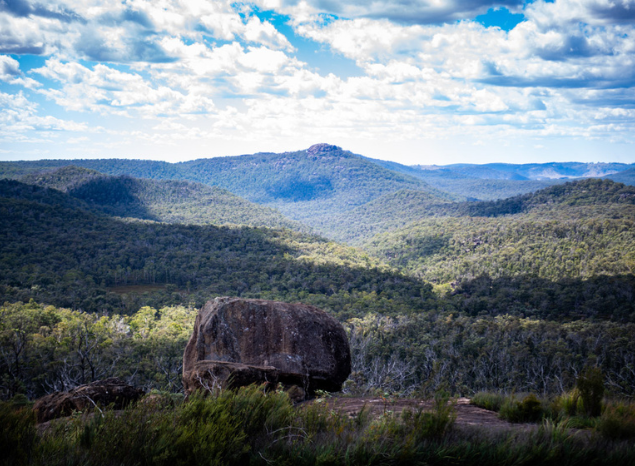
There Birribirigibba remained for eons, right up until the moment Banbai people finally won their struggle to set up the Wattleridge Indigenous Protected Area (IPA) – the first IPA to be declared in NSW back in 2001.
‘We had our Country Back’
“When we came back here a short time after, we found his head lying on the ground where he still is today,” Kane said, pointing at a rock with an uncanny resemblance to a human head resting on its side.
“He was finally able to stand down after all that time because us Banbai had our Country back.”
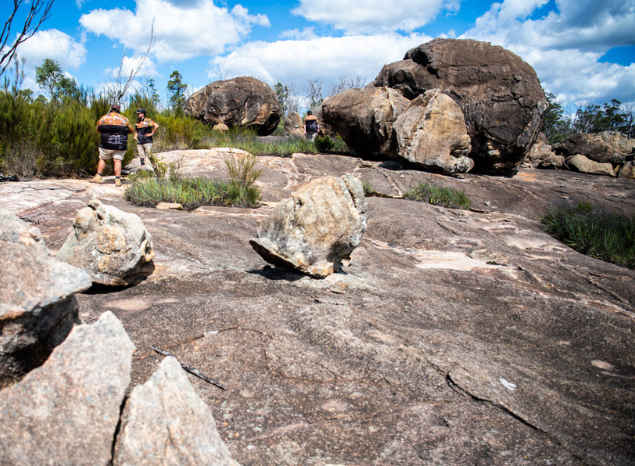
Knucklebone stands at over 1,300m on Wattleridge and looks east over a deep forested valley to the highest ridge of the Great Dividing Range, where peaks such as Round Mountain and Mount Mitchell soar to 1,500m. The high ranges are the catchment areas for big river systems flowing east to the coast including the Clarence and Mann Rivers.
Wattleridge takes in 480ha of mountainous granite country on the eastern side of Banbai Country while to the west, about an hour’s drive away, sits Tarriwa Kurrukun IPA which was dedicated in 2009 and covers a further 930ha.
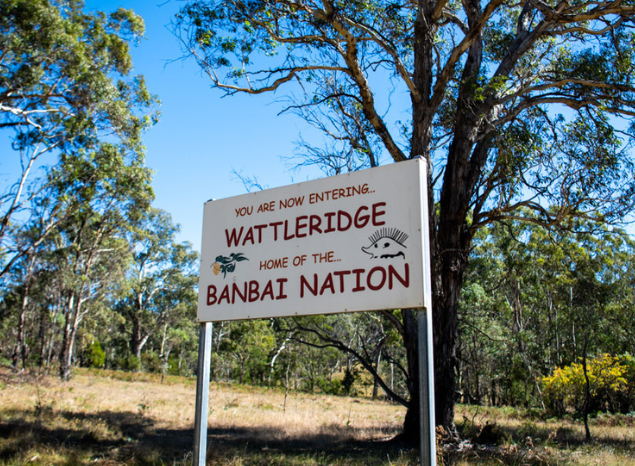
Both IPAs are cared for by Banbai Rangers who are based in the town of Guyra which sits at the heart of the 6,000km2 Banbai Nation.
A Lot of Ground to Cover
The Banbai Rangers are a small team comprising Kane, long-time female Ranger Aunty Lesley Patterson, two younger male Rangers and a female Ranger who doubles as the admin person. Between them they have a lot of ground to cover.
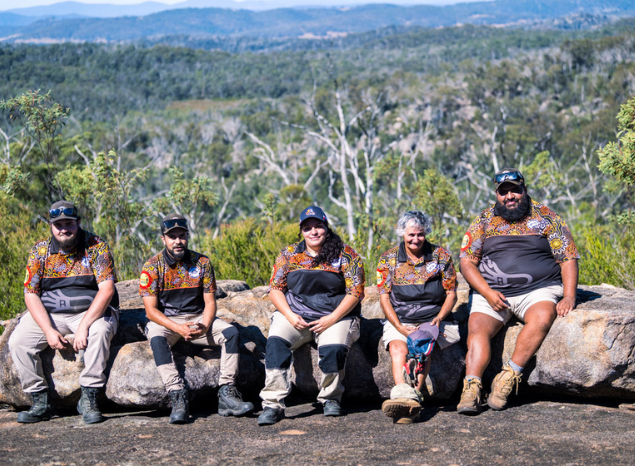
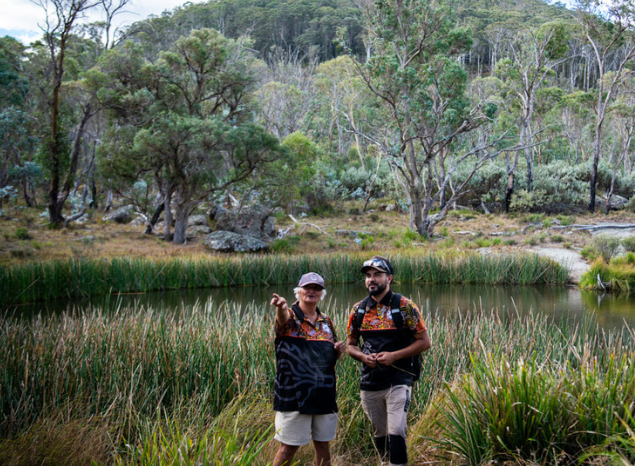
“At Wattleridge we’ve got a lot of wet boggy sorts of areas and wet sclerophyll forest, different types of forest, also dense bushland as well,” Kane said. “Out at Tarriwa it’s more of a drier forest, predominantly stringybark forest country with a few upland wetlands that we manage, and more river country out there as well."
"The IPAs provide great habitat for animals such as kukra, our word for echidna, and we also do a lot of bush regen work to encourage our glossy black cockatoos."
"They rely on she-oaks and we’ve been putting a lot of work into them, especially after the bushfires went through here a few years back. We’ve also got gliders and plenty of other small animals such as antechinus (small carnivorous marsupials) that we need to protect from predators like foxes and cats."
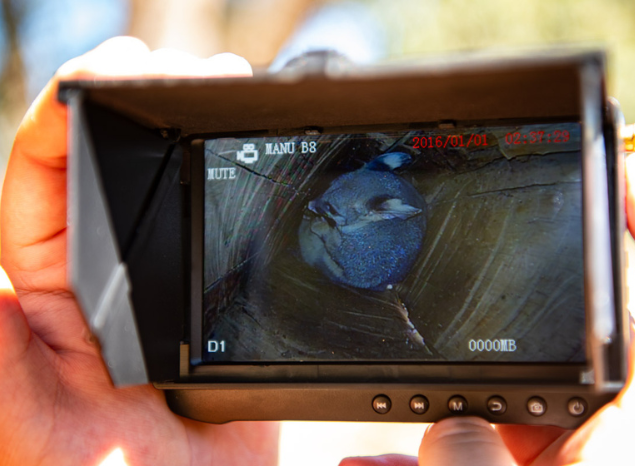
“Out at Tarriwa we’ve got powerful owls, probably more of them there than here [at Wattleridge] because that’s where the healthy possum numbers are, and that’s where the powerful owls will stay around as well.”
Living on Country
Aunty Lesley is a community Elder who grew up on Banbai Country and has been working as a Banbai Ranger for 17 years.
“The difference between the two IPAs, a majority of it would be the plants,” Aunty Lesley said. “Out here [on Wattleridge] we’ve got the black grevillea, whereas over at Tarriwa Kurrukun we’ve got yellow grevillea that stands tall, we’ve got all different gum trees… there’s plants on Tarriwa that really don’t grow anywhere else.
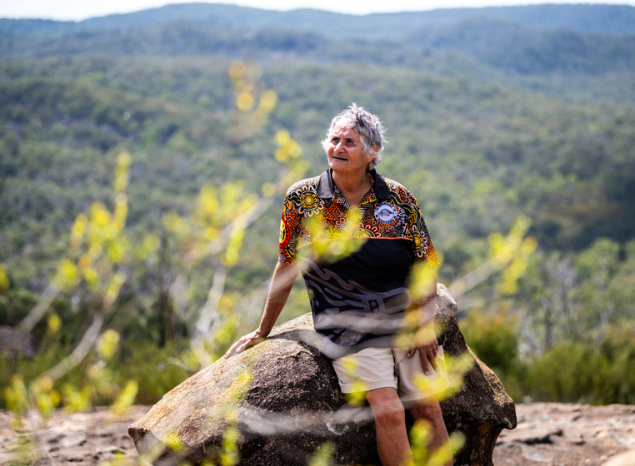
“The country’s different too. Here we’ve got lots more kangaroos whereas over on the western side we’ve got the Bell’s turtles – we don’t get them here over on the eastern side. Just like we get quolls over here on the eastern side but not on the western side.”
Kane has been working as a Ranger for 15 years and said the big lesson during his time was the importance of cool season burns, especially around cultural sites.
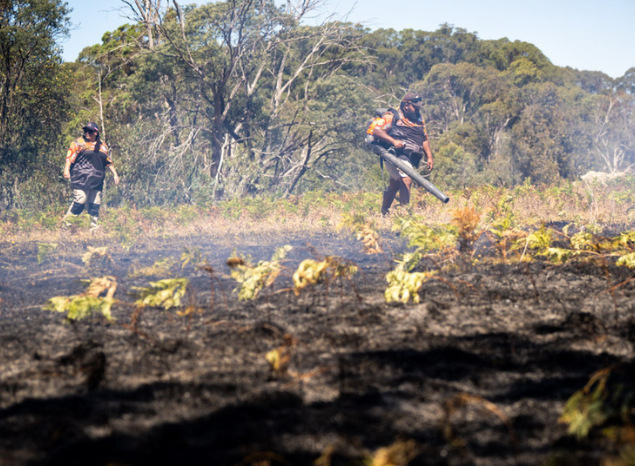
“I think the main challenge is the changing of the seasons coming in – you’ve got the big devastating fires coming through Country now and burning hot. It’s one of the hardest things to see.”
Call for State Funding
Unlike other Australian States, NSW does not provide funding to Ranger groups to augment federal funding. Aunty Lesley would like that to change.
“On our Country it’s hard to make progress with all the things we want to do because we’re just trying to keep all the existing problems under control, like weeds and feral animals.
“I know there’s a lot of state grants out there but most of them seem to stop at the IPA boundary. When we had that big rainfall a few years back, it wiped out our road but when I put in for the [state recovery] grant we didn’t qualify – there was a lady I talked to on the other end of the phone who didn’t understand what an IPA was!
“I mean, they should know it because there’s a lot of IPAs and Ranger groups in NSW. Luckily we had Country Needs People and some groups from Queensland who helped us through that rough time.”
Aunty Lesley says extra state funding and support would mean more heavy machinery, more equipment, more Rangers on the ground.
“We’ve got to be equipped to look after Country. Not all Country is the same, which is to say – Country is all one Country, but it’s just like having six siblings, all with different personalities.”
Righting a Historical Wrong
Kane said extra NSW Government funding was particularly relevant due to the history of widespread Aboriginal dispossession across the State.
“[NSW] is one of the main states where mob were disconnected from Country".
"It’s just sort of unreal that we haven’t got that extra support from the state government to get mob back on Country, connected to Country."
“We need a lot more Rangers, a lot more women Rangers as well.”
Aunty Lesley said the biggest regret in her life is the loss of her Aboriginal language – “it all ended with my Mum’s generation because they were taught it was the devil’s language” – but she has high hopes that her grandchildren will learn more about it.
“You see, when I was born we were just flora and fauna.
"Having this IPA makes you feel like you’re worth something… to be able to pass on knowledge to the next generation will be better for them because we’ve been there and done that. Hopefully make them stronger and more resilient".
“I hope our Old People appreciate what we’re doing. I would have loved to have been around with my Elders before Cook come along, just to see that different Australia to now. Australia was never meant to be fenced, our native animals were meant to roam free.”