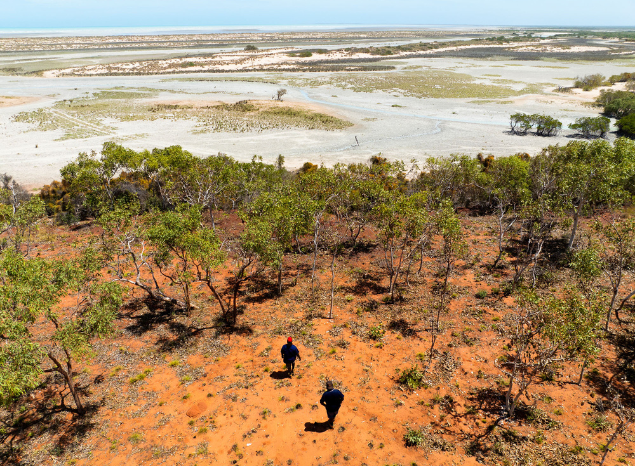
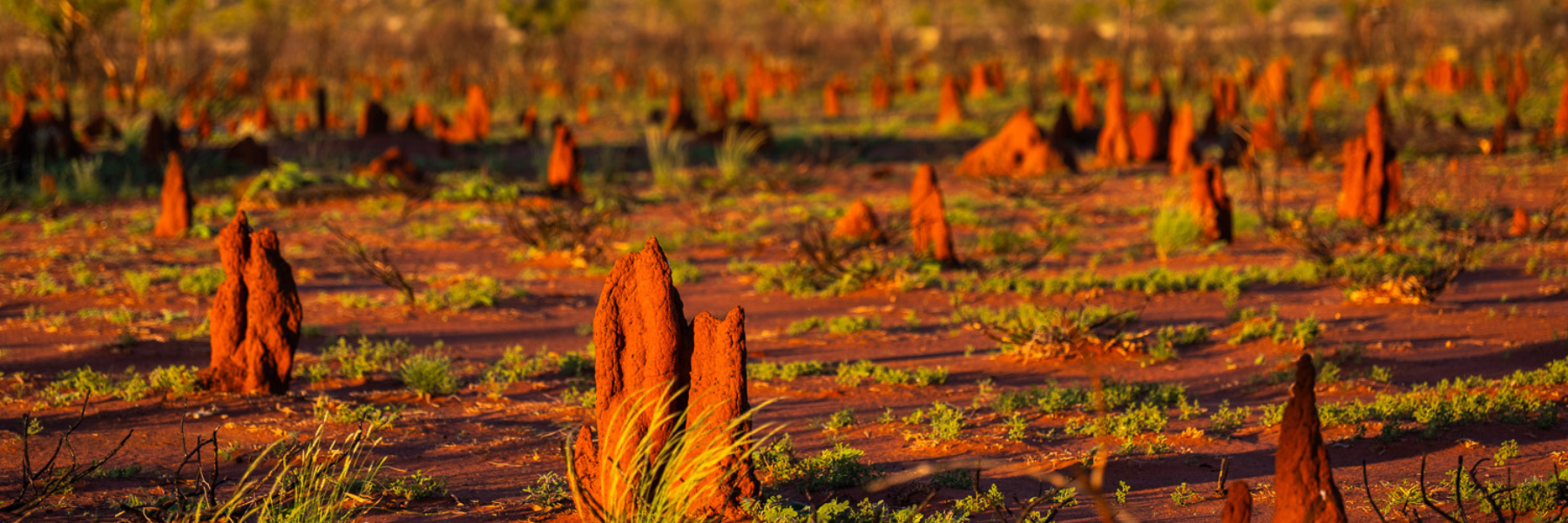
Desert Country inspires awe and marvel by visitors from across Australia and the world.
Its rare and unique species, stunning diverse landscapes and rich culture and history make it fascinating and enigmatic. With complex threats from camels to climate change, how do Indigenous Rangers successfully protect Country including across their vast Indigenous Protected Areas?
Desert Country - A vast and rich mosaic
Desert Indigenous Protected Areas (IPAs) together make up the largest interconnected protected area on Earth, constituting 60 million hectares which is roughly the size of Ukraine. There are more than 30 IPAs spread across many distinct desert areas including large IPAs like Ngaanyatjarra (approx. 10M hectares) to the smaller ones like Angas Downs (more than 320K hectares). Desert IPAs cover deserts including Great Victoria Desert, Tanami Desert, Great Sandy Desert, Gibson Desert and many more.
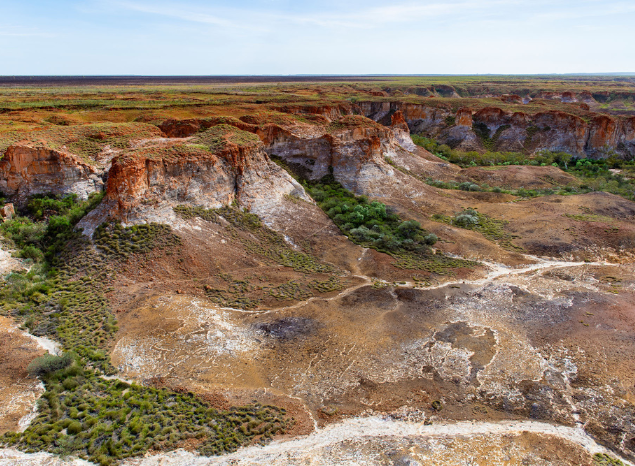
Caring for Country
Protecting the environment and sustaining culture under elders' guidance are intertwined goals of Indigenous Rangers. With significant threats to Country stemming from altered fire patterns, destructive invasive species, climate change, land fragmentation due to increased resources use and developments and more.
Indigenous Rangers take on diverse roles to manage and heal Country. This includes protecting threatened species, fire and erosion management, mapping and protecting cultural, sacred sites and threatened species, monitoring, ecological surveys, invasive weed and feral animal control, intergenerational knowledge transfer, revegetation, water monitoring and waterhole protection and more.
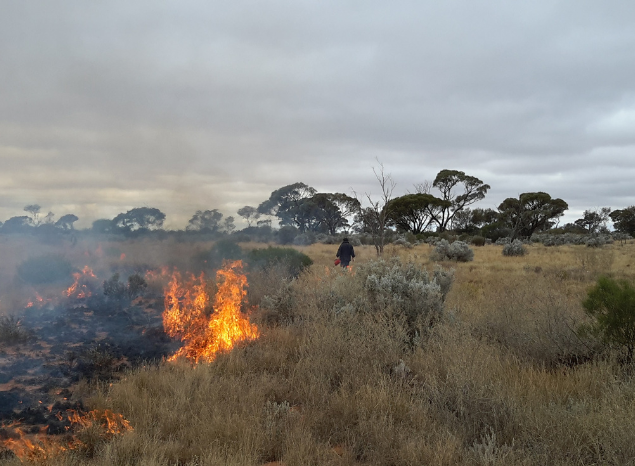
There are around 100 desert Ranger groups, including, Tjakura Rangers (NT), Warnpurru Rangers (WA), Arabana Rangers (SA), Marputu Rangers (WA), Spinifex Rangers (WA), Ngururrpa Rangers (WA), APY Rangers (SA), Anmatyerr Rangers (NT) just to name a few. Many are supported by Aboriginal led host organisations like Central Land Council, Kimberley Land Council and Desert Support Services as well as key regional networks like the Indigenous Desert Alliance.
The IPAs range in size and ecosystem type and climate, like the Northern and Southern Tanami IPAs (NT) which combined cover more than 14 million hectares (larger than the size of Greece), to Ngururrpa IPA (WA) famous for hosting the largest known population of the critically endangered night parrots.
What makes the desert unique
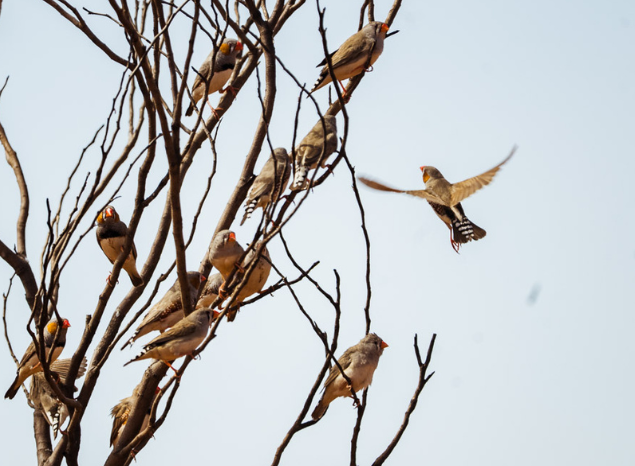
The desert is home to thousands of plant and animal species. Among the animals are native mammals like the vulnerable greater bilby, spinifex hopping mouse, kowari and fat-tailed dunnart. There are hundreds of species of birds like the critically endangered night parrot, rufous-crowned emu wren, spinifex pigeon and cinnamon quail-thrush and more than 200 species of reptiles like the thorny devil, the vulnerable tjakura (great desert skink), the woma python and the central bearded dragon. These species, thanks to thousands of years of Traditional Owners living in and shaping desert ecosystems are part of a rich and unique ecosystem with many secrets still yet to be revealed.
Desert IPAs are a contemporary extension of tens of thousands of years of Traditional Owners caring for Country. Desert Country is replete with sacred sites, songlines, waterholes, bush foods and myriad other values which are managed and nurtured by Indigenous Rangers and Traditional Owners to maintain healthy Country.
Landscapes and bioregions
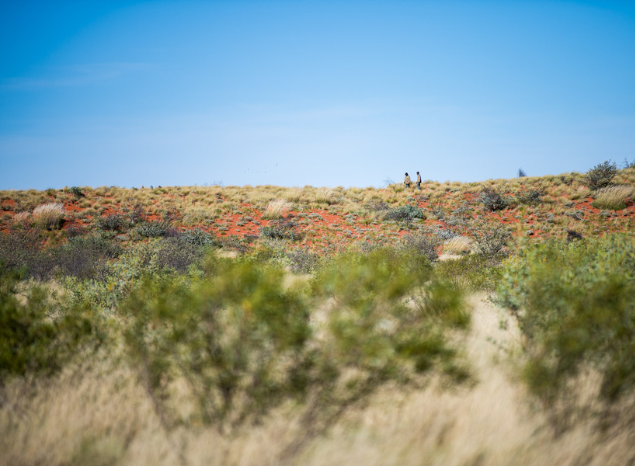
While some may think of the desert as homogeneous, this couldn't be further from the truth. Desert Country includes a magnificent diversity of landscapes and bioregions, from plains to escarpments, from red sandy soils to rocky and clay based soils. Native species have coevolved to thrive under each of these niches in concert with Traditional Owners' presence, use and management of the landscape and have formed distinct bioregions from the Great Sandy Desert bioregion in northeastern WA known for its spinifex grasslands to the Gawler bioregion in SA famous for its mulga (acacia) sparse woodland and chenopod shrublands.
In each of these bioregions, certain plants can form the backbone of entire ecosystems by providing shelter, food, nesting sites and water - and even stabilise sand dunes.
Other important plants, like the vulnerable Tjilpi wattle Acacia latzii, is found in two small regions in southern NT. Its wattle flowers produce nectar that is consumed by insects and birds, like the vulnerable Painted Honeyeater Grantiella picta. The wattle's sensitivity to invasive herbivores prevent seedling establishment while introduced buffel grass smothers the wattle and introduces hot, destructive wildfire destroying fire sensitive desert species like these.
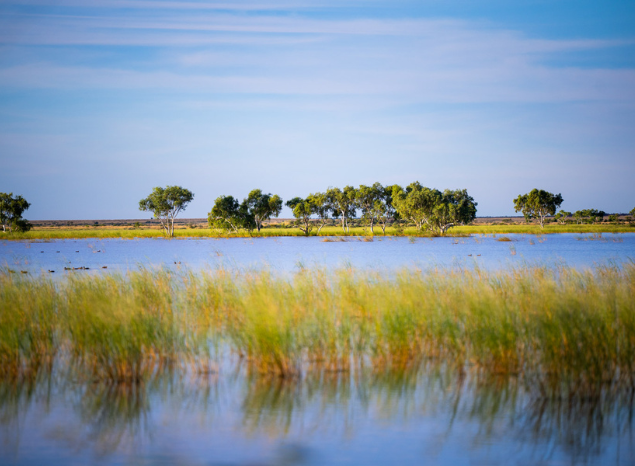
Indigenous Rangers and their host organisations do a lot of planning and preparation to make sure their work is having the greatest impact, which is especially important when working over vast desert distances. In March every year as one example, Traditional Owners from across the desert come together and collaborate with scientists and land managers for the desert’s largest collaborative threatened species monitoring event called Mulyamiji March, facilitated by Indigenous Desert Alliance. In 2024 there were 15 Indigenous Ranger teams who surveyed around 100 separate sites across 3 states.
During Mulyamiji March Rangers use their expert tracking skills and local knowledge along with western science techniques to search for, track and record the Great Desert Skink, also known as tjakura, mulyamiji, tjalapa, warrarna and nampu in different areas and language groups. This is a large orange skink (which is around the size of a blue tongue lizard!) and has high cultural significance to many language groups. Once widespread across the desert it is now one of the many native animals threatened by feral cats in particular. Indigenous Rangers have found that the Great Desert Skink still thrives where the Rangers conduct traditional burning and feral cat management - with more than 200 burrows found in the 2024 survey.
Songlines and Bush Tucker
Songlines, or Dreaming tracks, are still an essential part of how Aboriginal people navigate, understand, and protect Desert Country. Songlines (oral maps encoded in song, story, and ceremony) are passed down through generations and follow the journey of ancestral beings who shaped the land, connecting sacred sites and ecological knowledge across thousands of kilometres.
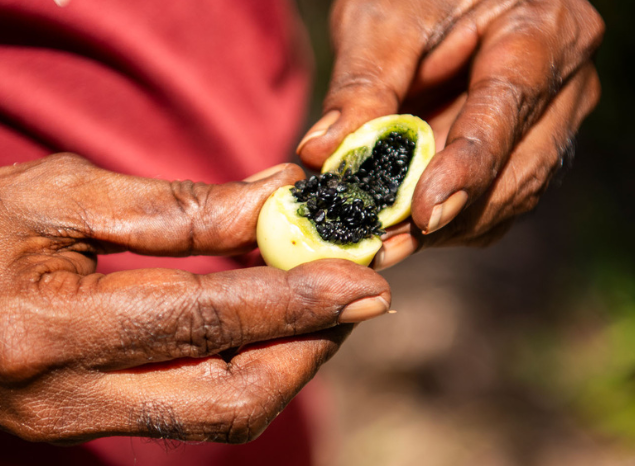
In Desert Country, songlines also help guide people to water sources, seasonal bush tucker, shelter and more. Bush tucker is more than food; it is considered an example of Country’s generosity and traditional law instills the responsibility to harvest and manage with care. From witchetty grubs to bush tomatoes and quandong, desert plants and animals are part of a complex ecosystem managed through traditional fire practices, seasonal movement and the maintenance of this intergenerational knowledge is critical to the survival of both traditional culture and Country.
Challenges and threats
In 1788, European colonialists brought with them more than 10 species of European animals to Australia including pigs, sheep, rabbits, goats, cats and more. The introduction of these species, and the hundreds of other species that were brought to Australia later (including camels in the 1840s) have caused and continue to cause enormous damage. Many native species don’t have the ability to survive predation or competition with invasive species resulting in extinction of many iconic Australian desert animals like the lesser bilby, desert bandicoot, central hare-wallaby and more.
There are millions of feral cats roaming across Australia, hunting and outcompeting native and culturally significant animals. Predation by feral cats has been a leading cause in the reduction of the ninu (Bilby) territorial range by 80% with fewer than 10,000 ninus thought to be remaining in the wild.
Another major invasive species in the desert is the feral camel of which there are estimated to be hundreds of thousands. While feral camels don’t prey on native animals, they degrade critical habitat, bush tucker species (eg. desert quandong) and significant cultural places like water holes through trampling, polluting or depleting the water. They’re also known to get stuck in the mud and die resulting in water fouling of precious water sources. Camels also damage sacred sites, bushfood and vegetation which native animals rely on for food and shelter. They’ve even been known to destroy remote community housing looking for water.
Indigenous Rangers such as those at Aṉangu Tjutaku IPA in remote WA understand these threats firsthand, having feral camels on their Country. They’re working hard to remove them through collaborations with broader management projects and culling. They also upskill Rangers through training programs for camel control and improve access to areas of high feral camel density for effective removal and reduction of numbers.
Find out more in our Managing Camels at Aṉangu Tjutaku IPA video below.
Desert Country (and desert IPAs) definitely needs its people
Desert Country is a magnificent mosaic of interconnected ecosystems home to important and rare plants and animals, and complex living cultural landscapes sustained by Traditional Owners. With Desert IPAs collectively representing the largest interconnected protected areas on the planet, desert Traditional Owners and Indigenous Rangers are taking a global leadership position, bringing together traditional knowledge and science to tackle contemporary pressures. With complex threats from invasive species, climate change, altered fire regimes and more, Indigenous Rangers' active presence and care for Country is crucial to maintaining healthy Country for current and future generations. In the words of the Traditional Owners of the Ngururrpa Indigenous Protected Area: “The Country needs people to look after the Country.”